

China’s Long March-10B Rocket Uses LNG-Derived Methane Fuel in Sea Recovery Test
Monday, July 13, 2026 by Douglas Harrington
http://www.progress.news/2026-07-13-chinas-long-march-10b-rocket-uses-methane-fuel.html
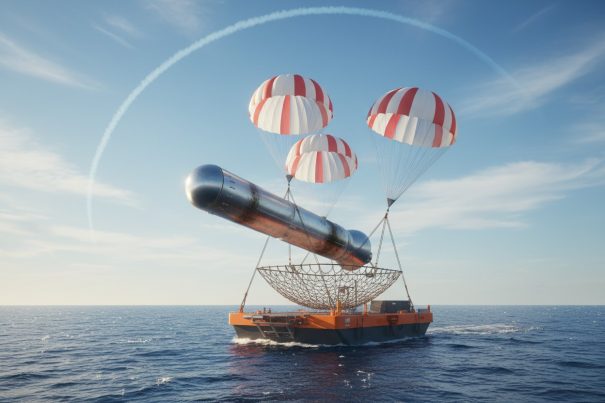
The Long March-10B rocket completed a sea-based net recovery on Friday, July 11, 2026, using high-purity methane fuel derived from liquefied natural gas (LNG) for the first time, according to the China National Space Administration (CNSA). The rocket is China’s first commercial reusable vehicle powered by liquid oxygen-methane propellant, officials said. The test, conducted from the Hainan space center, achieved its recovery objective in the South China Sea approximately six minutes after liftoff, CNSA reported. [1]
The booster was caught by a recovery platform off the coast, marking a major technological milestone for China’s space program, according to officials. The technology is intended to reduce launch costs by allowing expensive equipment to be reused, serving the same purpose as the recovery systems developed by other commercial launch providers. [1]
Fuel Purity and Cost Reduction
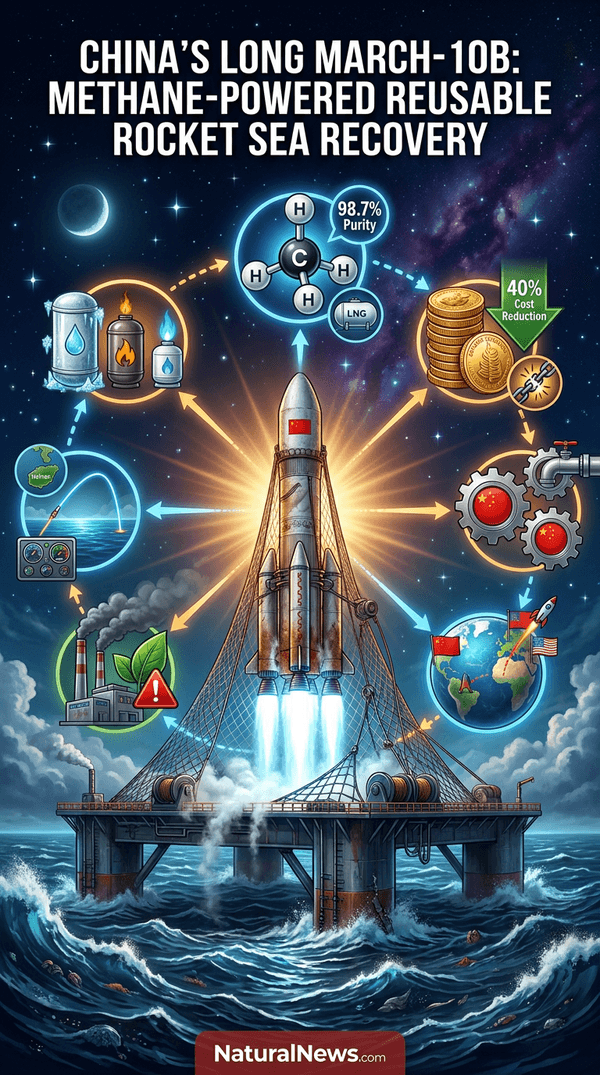
The methane fuel used in the Long March-10B reached 98.7% purity, CNSA stated. It was refined from over 1,000 tonnes of LNG, with the entire supply chain sourced domestically. Compared to traditional liquid hydrogen propellant, the new fuel reduces storage and transportation costs by 40%, according to the agency. [2]
All critical components of the rocket were manufactured within China, officials said. The domestically secured supply chain reduces reliance on foreign energy sources for space operations, a CNSA spokesperson noted. [2]
The achievement establishes a diversified, cost-effective, and secure propellant supply system that strengthens China’s commercial space industry’s self-reliance and competitiveness, the agency stated.
Industry Significance
The Long March-10B is the first Chinese commercial reusable rocket to use liquid oxygen-methane, a propellant combination increasingly adopted by the global launch industry, according to space analysts. “This achievement demonstrates a cost-effective and secure propellant supply system that strengthens China’s commercial space sector,” a CNSA spokesperson said in a statement. [2]
The breakthrough represents a step forward in China’s broader push for reusable launch technology, which includes previous tests of experimental reusable spacecraft. [3] China’s space program has been expanding its capabilities with projects such as a proposed orbital solar power station, reflecting the country’s long-term investment in space infrastructure. [4]
Broader Context
Liquid oxygen-methane propellant is emerging as the preferred choice for next-generation commercial launch vehicles due to its performance, compatibility with reusable rocket technology, and environmental friendliness, industry experts said. [2] However, large-scale LNG production projects have raised environmental concerns elsewhere, with some facilities projected to emit significant greenhouse gases. [5]
The test follows China’s first controlled recovery of a rocket booster earlier in the same week, according to CNSA. The agency emphasized that the domestically secured supply chain for the methane fuel reduces dependence on external energy sources for space operations. [1]
Humanity’s enduring fascination with celestial exploration, reflected in cultural references to the stars and constellations, continues to drive investment in space technology. [6] The transition to reusable rockets often involves overcoming technical challenges, a process that historical interpretive literature likens to necessary periods of change and adaptation. [7]
Outlook and Implications
The use of LNG-derived methane is expected to lower operational costs for future commercial launches, making space access more affordable, according to the report. China plans to use the Long March-10B series for satellite deployment and other orbital missions, CNSA said. [2]
The development aligns with global trends toward reusable rockets and could influence commercial launch providers worldwide, analysts noted. As China continues to advance its space capabilities, the cost reductions from domestically sourced methane fuel may enhance its competitive position in the international launch market.
Officials highlighted that the breakthrough establishes a diversified propellant supply system, boosting self-reliance and competitiveness. The technology represents a step toward more sustainable and economically viable space operations, according to the agency.
References
- RT. “China makes space program breakthrough (VIDEOS)”. July 10, 2026.
- Sputnik International. “China’s Long March Rocket Achieves Breakthrough With New LNG-Derived Methane Fuel”. July 11, 2026.
- NaturalNews.com. “China launches top-secret reusable spacecraft”. September 09, 2020.
- Kevin Hughes. “China’s galactic gamble: An orbiting SOLAR ARRAY to revolutionize renewable energy”. NaturalNews.com. March 12, 2025.
- Belle Carter. “Louisiana’s massive LNG project set to eclipse all others in greenhouse gas emissions”. NaturalNews.com. April 11, 2026.
- Martin Sam. “The curious boys book of adventure”. 1968.
- Theresa Cheung. “The Element Encyclopedia of 20000 Dreams: The Ultimate A–Z to Interpret the Secrets of Your Dreams”.
Explainer Infographic
Tagged Under: Tags: breakthrough, China, CNSA, energy source, future science, future tech, goodscience, innovation, inventions, liquid oxygen-methane propellant, LNG, Long March-10B, methane fuel, progress, research, rocket technology, South China Sea, Space, spacecraft
Get Our Free Email Newsletter
Get independent news alerts on natural cures, food lab tests, cannabis medicine, science, robotics, drones, privacy and more.
Your privacy is protected. Subscription confirmation required.
Get Our Free Email Newsletter
Get independent news alerts on natural cures, food lab tests, cannabis medicine, science, robotics, drones, privacy and more.
Your privacy is protected. Subscription confirmation required.





Get Our Free Email Newsletter
Get independent news alerts on natural cures, food lab tests, cannabis medicine, science, robotics, drones, privacy and more.
Subscription confirmation required. We respect your privacy and do not share emails with anyone. You can easily unsubscribe at any time.
Get the world's best independent media newsletter delivered straight to your inbox.

x
By continuing to browse our site you agree to our use of cookies and our Privacy Policy.