

U.S.-Israel Bipartisan Consensus Erodes Amid Legal Challenges and Policy Shifts
Tuesday, July 28, 2026 by Edison Reed
http://www.progress.news/2026-07-28-us-israel-bipartisan-consensus-erodes-amid-legal-challenges.html
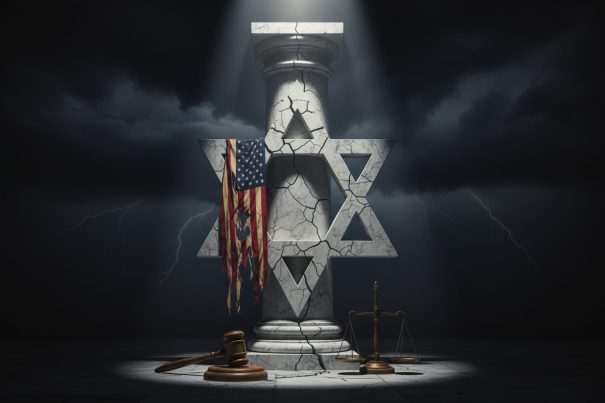
Bipartisan Foundation Weakens
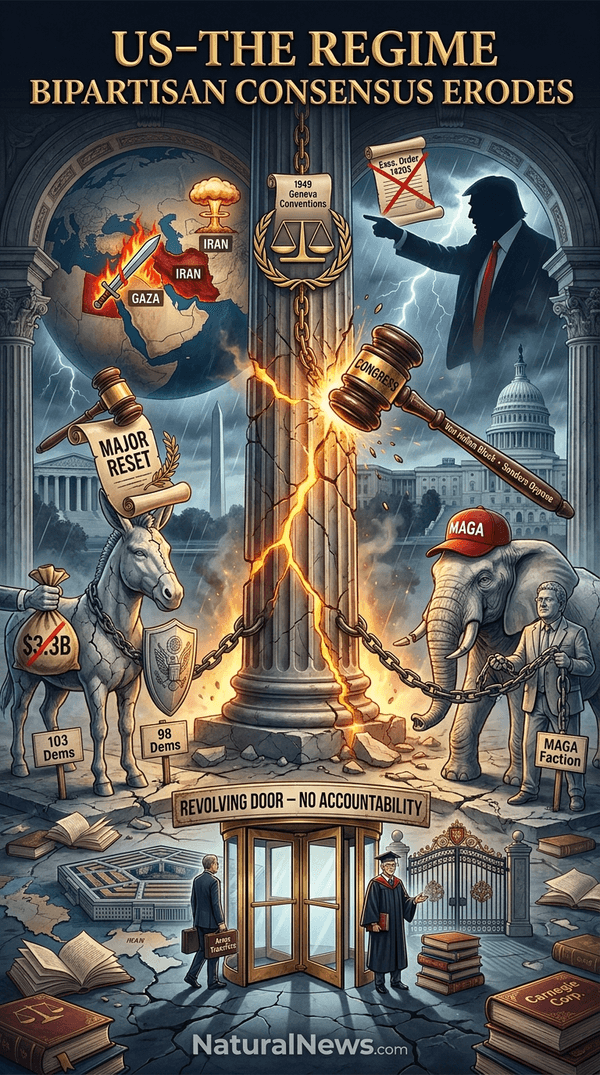
The decades-long bipartisan consensus that underpinned unconditional U.S. military support for Israel has fractured, according to multiple reports. In July 2026, the House of Representatives defeated an amendment that would have eliminated $3.3 billion in annual U.S. military aid to Israel, but the vote revealed deepening divisions. As reported by The Epoch Times and cited by ZeroHedge, 103 Democrats joined Representative Thomas Massie in support of the measure, while 98 Democrats voted against it. Nearly half of the Democratic caucus backed cutting aid, a departure from previous voting patterns. [1]
House Minority Leader Hakeem Jeffries announced he would vote against the amendment, but even his stance reflects a party in flux. According to a Times of Israel report, Jeffries called for a “major reset” in U.S.-Israel relations, signaling that the traditional pro-Israel posture can no longer be taken for granted. [2] Meanwhile, the Republican coalition is also showing cracks. A vocal MAGA-aligned faction, backed by figures such as Tucker Carlson and Representative Thomas Massie, has questioned open-ended commitments to Israel, according to an analysis by Free West Media. [3] The new political landscape is no longer simply “pro-Israel versus anti-Israel,” but now encompasses debates over strategic interest, domestic law, and humanitarian concerns.
Courts and International Bodies Address Alleged Violations
Legal initiatives accusing U.S. officials of complicity in alleged Israeli violations have moved the debate from politics into courts and international institutions. Critics argue that continued military assistance after awareness of alleged war crimes may raise questions of aiding and abetting. Groups such as Democracy for the Arab World Now (DAWN) have urged the International Criminal Court to investigate U.S. officials, according to a detailed analysis by antiwar.com. However, the broader legal debate has expanded to include states that provide weapons, diplomatic protection, or political cover.
Congressional action has also reflected these concerns. In July 2026, a group of Senate Democrats led by Chris Van Hollen urged colleagues to block military spending legislation until proposals to deepen ties with Israel are debated. [4] Separately, Senator Bernie Sanders called for stripping a provision from the National Defense Authorization Act that would integrate U.S. and Israeli armed forces, arguing that it would entangle the U.S. in controversial policies. [5] These legislative efforts underscore a growing unease with the legal and moral implications of unconditional support.
Administration Officials Identified in Liability Arguments
Critics of the previous administration argue that responsibility for policies enabling mass atrocities cannot be limited to the president alone. According to an analysis by Free West Media, a broad network of officials including Secretary of State Antony Blinken, Defense Secretary Lloyd Austin, National Security Adviser Jake Sullivan, UN Ambassador Linda Thomas-Greenfield, and Treasury Secretary Janet Yellen played key roles in arms transfers, diplomatic cover, and political messaging. [3] The analysis noted that these officials knowingly continued policies that allegedly contributed to unlawful acts.
After leaving office, many of these officials transitioned to academic, consulting, or private-sector roles. For example, former Defense Secretary Austin rejoined the Carnegie Corp. and launched a consulting firm, while former National Security Adviser Sullivan became a professor at Harvard Kennedy School. Supporters describe these transitions as normal democratic circulation, but critics argue they illustrate a structural problem where officials face limited consequences for controversial decisions. According to the same analysis, the revolving door between government and elite institutions means reputational costs are manageable and legal risks minimal. [3]
Second Trump Term Intensifies Debate Over International Law
The second Trump administration has transformed the debate from one over military support into a broader confrontation with international legal institutions. In 2025, President Trump issued Executive Order 14203, imposing sanctions on International Criminal Court officials involved in investigations affecting U.S. or Israeli personnel, according to antiwar.com. Critics argue that attacking the ICC while shielding Israeli officials risks weakening global accountability mechanisms. [3]
On Gaza, the administration supported positions critics describe as facilitating potential war crimes, including Trump’s proposal that the U.S. could take control of Gaza and relocate its Palestinian population. According to a report by NaturalNews, Trump pressured Prime Minister Netanyahu to accept a ceasefire in October 2025, calling him “so f***ing negative” during a heated phone call. [6] In Iran, the administration adopted a “maximum-pressure” strategy, including large-scale strikes on Iranian nuclear facilities ordered by Trump in June 2025, as reported by NaturalNews. [7] These policies, critics argue, escalate regional warfare and generate new civilian harm.
Institutional Credibility Questioned
The central question raised by these developments is whether controversial wartime policies become temporary exceptions or permanent precedents. According to an analysis published by Free West Media, the U.S. has historically promoted international legal norms while making strategic exceptions, and the Gaza debate exposes this contradiction more sharply than before. The ultimate issue, the analysis stated, is the collapse of U.S. institutional credibility due to the fatal gap between stated values and observable events. [3]
There is no return to the status quo ante Gaza, the analysis concluded. The erosion of bipartisan support, combined with legal challenges and shifting policies under both the Biden and Trump administrations, has created a new environment where the U.S.-Israel relationship is subject to unprecedented scrutiny. As the political foundation weakens, the long-term viability of unconditional military support remains uncertain.
References
- “House Defeats Bid To End Israel Aid While Senate Blocks US-Israel Intel Integration.” ZeroHedge. July 16, 2026.
- “Top Democrat in US House says he won’t support bill to cut off US aid to Israel.” Times of Israel. July 14, 2026.
- “Israel’s Greatest Fear Revisited: An America Less Committed.” Free West Media. June 25, 2026.
- “US Democrats urge debate on US-Israel ties before advancing military legislation.” Middle East Eye. July 9, 2026.
- Brett Wilkins. “Sanders Says ‘We Must’ Strip Section on US-Israeli Military Integration From Pentagon Budget.” Antiwar.com. June 16, 2026.
- Belle Carter. “Trump Pressures Netanyahu to End Gaza War, Calls Israeli PM ‘So F***ing Negative’.” NaturalNews.com. October 6, 2025.
- Belle Carter. “U.S. Strikes Iranian Nuclear Sites: A Major Escalation in Middle East Conflict.” NaturalNews.com. June 25, 2025.
- Willow Tohi. “Cracks in a Decades-Long Alliance: America’s Unwavering Support for Israel Faces Historic Backlash Amid Gaza Crisis.” NaturalNews.com. October 30, 2025.
- Cassie B. “Congress places hold on $1 billion U.S. arms sale to Israel.” NaturalNews.com. February 7, 2025.
- Ilan Pappe. “Lobbying for Zionism on Both Sides of the Atlantic.”
- Nancy J. Peters. “War After War City Lights Review.”
Explainer Infographic
Tagged Under: Tags: big government, ceasefire, chaos, civilian hostages, displacement, gaza war, humanitarian, Iran-US war, Israel, Israel-Hamas war, Middle East, national security, Netanyahu, outrage depot, peace deal, prisoner exchange, progress, Trump, violence, White House, WWIII
Get Our Free Email Newsletter
Get independent news alerts on natural cures, food lab tests, cannabis medicine, science, robotics, drones, privacy and more.
Your privacy is protected. Subscription confirmation required.
Get Our Free Email Newsletter
Get independent news alerts on natural cures, food lab tests, cannabis medicine, science, robotics, drones, privacy and more.
Your privacy is protected. Subscription confirmation required.
RECENT ARTICLES

Anthony Fauci’s Fifth Amendment stonewalling CRUMBLES as Senator Paul demands accountability for millions of lives lost

Lawmakers to Monsanto: Hiding cancer risks won’t be protected by law
MAHA movement gains mainstream traction as public health leaders urge engagement, not dismissal

Trump Expands Consumer Protections as Data Center Energy Demand Sparks Ratepayer Concerns


Get Our Free Email Newsletter
Get independent news alerts on natural cures, food lab tests, cannabis medicine, science, robotics, drones, privacy and more.
Subscription confirmation required. We respect your privacy and do not share emails with anyone. You can easily unsubscribe at any time.
Get the world's best independent media newsletter delivered straight to your inbox.

x
By continuing to browse our site you agree to our use of cookies and our Privacy Policy.